The Motivation and Philosophy of the REM Framework
The REM Framework (Recursive Emergent Mechanics) is a research framework that investigates how complex physical phenomena may emerge from simple deterministic recursive mechanics operating within a discrete system.
The framework begins with a different starting point from many conventional approaches. Instead of assuming particles, fields, forces, or spacetime as fundamental entities, the REM Framework explores whether these phenomena can arise as emergent consequences of underlying mechanical rules.
The central idea is that complexity does not necessarily require complex fundamental principles. A system governed by simple local interactions can develop organized structures and behaviors through repeated recursive evolution.
The Fundamental Question
The REM Framework is built around a fundamental question:
Can the behavior of the physical universe emerge from a small set of local recursive mechanical principles?
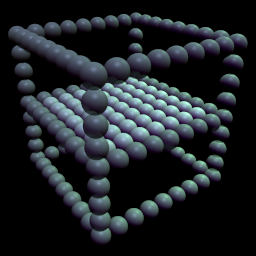
To investigate this question, the framework starts with a discrete lattice of interconnected nodes. Each node follows defined update rules and interacts only with neighboring nodes.
Through repeated recursive updates, the system can produce:
- oscillations,
- wave propagation,
- stable structures,
- transport behavior,
- and interactions between emergent structures.
The objective is not to assume these phenomena as fundamental, but to investigate whether they can naturally arise from the underlying mechanics.
A Different Starting Point
Many existing physical descriptions begin with concepts such as:
- particles,
- fields,
- forces,
- energy,
- spacetime.
The REM Framework explores a different direction:
Begin with the mechanics that could generate these concepts.
Within this approach:
- A wave is not assumed as a fundamental object, but emerges from recursive interactions.
- Motion is not assumed as continuous movement through space, but emerges through discrete transport mechanisms.
- Stable structures are not assumed as particles, but emerge from persistent recursive patterns.
- Interactions are not introduced as separate forces, but emerge from the behavior of the underlying system.
This places emergence at the center of the framework.
Emergence as a Principle
Emergence describes how higher-level behavior can arise from lower-level interactions.
Examples in nature include:
- collective behavior from many interacting individuals,
- complex patterns from simple physical processes,
- organized structures from repeated interactions.
The REM Framework applies this principle to fundamental mechanics.
The framework investigates whether:
$$ \text{simple recursive mechanics} $$
can lead to:
$$ \text{complex physical behavior} $$
through repeated interactions over time.
The Role of Recursion
Recursion is the central mechanism of the REM Framework.
At each update step, the current state of the system determines the next state.
The recursive evolution of the system can be represented as:
$$ S_{n+1}=F(S_n) $$
where:
- $S_n$ represents the complete state of the system at update step $n$.
- $F$ represents the recursive update mechanism.
The next state is determined entirely from the previous state. The system does not require external information about future states.
Through many recursive iterations, simple local rules can generate increasingly complex behavior.
Research Approach
The REM Framework combines:
- mathematical formulation,
- computational simulation,
- analysis of emergent behavior,
- and progressive refinement of the underlying mechanics.
The development follows a bottom-up approach:
$$ \text{Local Mechanics} $$
$$ \downarrow $$
$$ \text{Recursive Dynamics} $$
$$ \downarrow $$
$$ \text{Emergent Structures} $$
$$ \downarrow $$
$$ \text{Observable Behavior} $$
This approach allows each emerging phenomenon to be studied from its underlying mechanism.
Scope of Investigation
The REM Framework currently investigates several areas.
Developed Foundations
- Discrete lattice mechanics
- Recursive node dynamics
- Oscillatory behavior
- Wave propagation
- Occupancy-based transport
- Pressure accumulation mechanisms
Emerging Phenomena Under Investigation
- Mass-like behavior
- Gravity-like behavior
- Electromagnetic field emergence
- Magnetism
- Electricity
- Atomic structures
The framework maintains a distinction between:
- developed mechanical principles,
- simulation observations,
- and open research questions.
Philosophy of the Framework
The REM Framework follows a guiding principle:
Physical complexity may emerge from recursive simplicity.
Rather than introducing increasingly complex fundamental rules, the framework investigates whether complex behavior can arise naturally from the repeated interaction of a small number of underlying mechanical principles.
Next Article
Definitions
The next article introduces the fundamental terminology of the REM Framework:
- Node
- Identity
- Occupancy
- Oscillation
- Pressure
- Transport
- Recursive Update
These definitions establish the language required for the mathematical and mechanical descriptions that follow.